How Void Filling Stops Future Settling
Inspection, fill, sub-grade compaction — the 3-step void filling process that prevents your slab from sinking again. Metro Detroit.
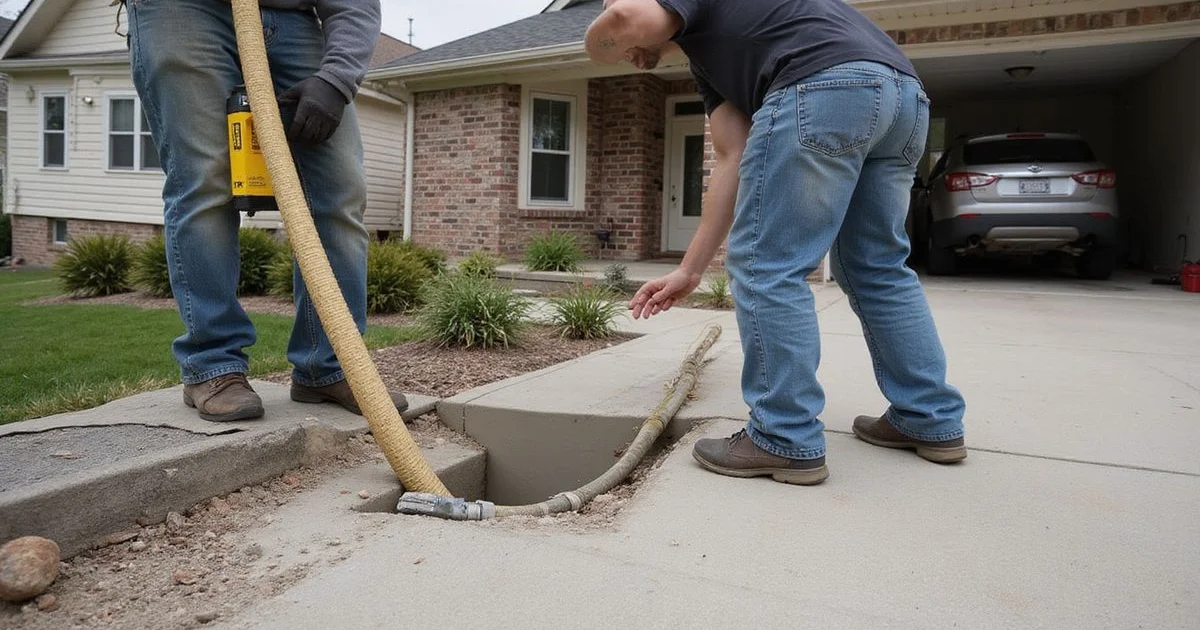
Many homeowners think a sinking driveway is just a heavy slab issue, but the real culprit is almost always the soil underneath. A void under your slab is the actual cause of concrete settling. Understanding the void filling process is the key to fixing it correctly.
Leveling a surface without addressing that empty space is a costly mistake.
It just fixes the symptom temporarily.
We see this constantly with Metro Detroit properties where the ground washes out. Filling the void is the permanent fix you actually need.
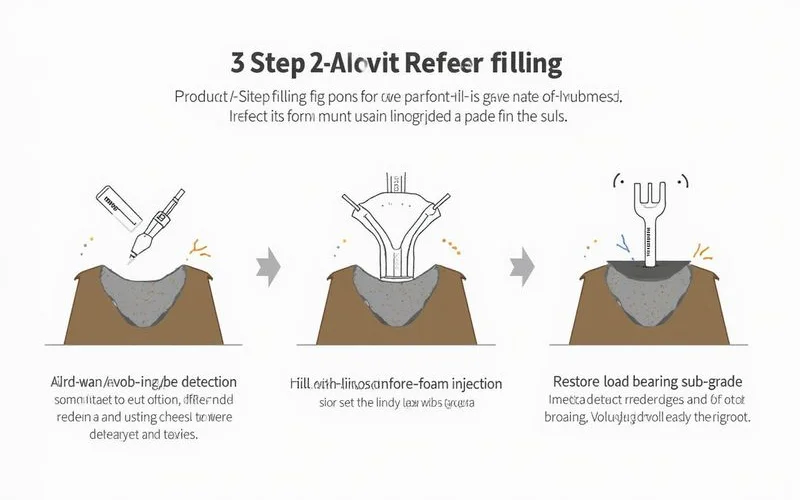
Step 1: Inspection and void mapping
We begin every project by drilling 3/8-inch probe ports directly across the suspected void area to map its exact dimensions. Finding the exact edges of the problem is crucial before pumping any material. Calibrated rods then measure the void depth at each port.
This physical measurement is much more reliable than just tapping the concrete with a hammer. Industry data from 2026 shows that hidden cavities caused by soil washout frequently range from two to eight inches deep.
Cross-checking multiple ports gives us an accurate void map that reveals:
- Depth: How far the soil has settled away from the slab.
- Area: The total square footage of the unsupported concrete.
- Boundaries: The hard edges where stable soil begins.
Our team uses this map to calculate the exact lift pressure required. Over-lifting a slab because of bad mapping is a common rookie mistake that creates severe cracking.
Step 2: Limestone-foam fill
Our 100% limestone-and-foam hybrid is pumped into the empty cavity through the same 3/8-inch ports to permanently stabilize the slab. This specialized mixture does three important things:
- Fills volume: The crushed limestone handles the heavy lifting by occupying large empty spaces efficiently.
- Stabilizes against washout: Closed-cell polyurethane foam locks the stone in place and acts as a waterproof barrier.
- Compacts as it cures: The expanding foam forces the sub-grade soil to compact downward while pushing the slab upward.
For Metro Detroit clay soils, utilizing this hybrid material is absolutely critical. High-density polyurethane foam expands 20 to 25 times its original volume. Pure foam alone gets expensive on very deep voids, while a pure soil-cement slurry just washes away during our wet Michigan springs.
We have found that the ability to efficiently fill voids under concrete makes this hybrid approach superior. The foam reaches 90% of its final strength in just 15 minutes.
| Material Option | Compressive Strength | Water Resistance | Ideal Use Case |
|---|---|---|---|
| Pure Mudjacking (Slurry) | Varies heavily (often < 50 PSI) | Low (can wash out) | Cheap fixes in dry climates |
| Pure Polyurethane Foam | 100 to 150+ PSI | High (hydro-insensitive) | Shallow voids or industrial floors |
| Limestone-Foam Hybrid | 100+ PSI combined | High (locks out moisture) | Deep voids in Metro Detroit clay |
Step 3: Sub-grade compaction confirmation
Confirming the structural integrity of the repair through re-probing is the final step of the soil stabilization process. We rigorously check the treatment area after the injection phase is complete.
This verification confirms a few critical details:
- The void is completely filled to the slab depth.
- The hybrid fill material is properly compacted.
- No hidden air pockets remain beneath the surface.
- Solid sub-soil contact is fully restored.
Skipping this confirmation leaves room for the “bounce” effect. If air pockets remain, your heavy concrete will vibrate under vehicle traffic and eventually crack.
Our technicians ensure the cured foam provides a compressive strength that often exceeds 100 pounds per square inch (PSI). Typical residential clay soils only offer about 14 to 21 PSI of bearing capacity. The new hybrid foundation is vastly stronger than the dirt it replaced.
Why this prevents future re-leveling
With comprehensive void filling, the concrete maintains permanent, stable sub-soil contact so it cannot sink again. The surface simply does not settle because there is no empty space left to fall into.
Most contractors offer a typical “fix” that only lifts the slab without properly filling the cavern below. That quick method usually means the concrete sinks again in two to five years.
We rely on closed-cell polyurethane because it is entirely waterproof. Traditional mudjacking mixtures absorb water and erode away during heavy rainstorms.
Pro-Tip: Never agree to a concrete lift that uses purely water-based mudjacking in freeze-thaw climates. The material will absorb moisture, freeze, expand, and ruin the leveling job within three years.
Recent 2026 cost data from Angi shows that professional concrete leveling averages between $5 and $15 per square foot. Tearing out and replacing a settling driveway can cost up to $5,000. Choosing a permanent fill method cuts your repair costs by 50% to 70% while extending the life of the concrete by decades.
Pairing with leveling
Most of this stabilization work is naturally paired with concrete leveling in a single visit using the same crew. We handle the void filling process during the actual lifting phase. You get the same specialized gear, the exact same experienced team, and a completed project all on the same day.
The rapid cure time of the foam hybrid means you never have to wait long to use your property. You can comfortably park a heavy truck on the treated driveway just hours after the work is finished.
For more details on how these hidden cavities form, see our guide on what are voids under concrete and explore our complete void filling service. Ready to stabilize your sinking slabs? Request a free estimate today.
Common Questions
Quick answers from our Metro Detroit crew.
Do I need void filling AND leveling?
How long does void filling take?
Have a slab to lift? Let's take a look.
Free, no-obligation on-site estimate. If we can't fix it, you don't pay.