Signs Your Concrete Needs Leveling
9 signs your driveway, sidewalk, or patio is sinking — and when to act. Photos, severity guidance, and what to call about. Free Metro Detroit assessment.
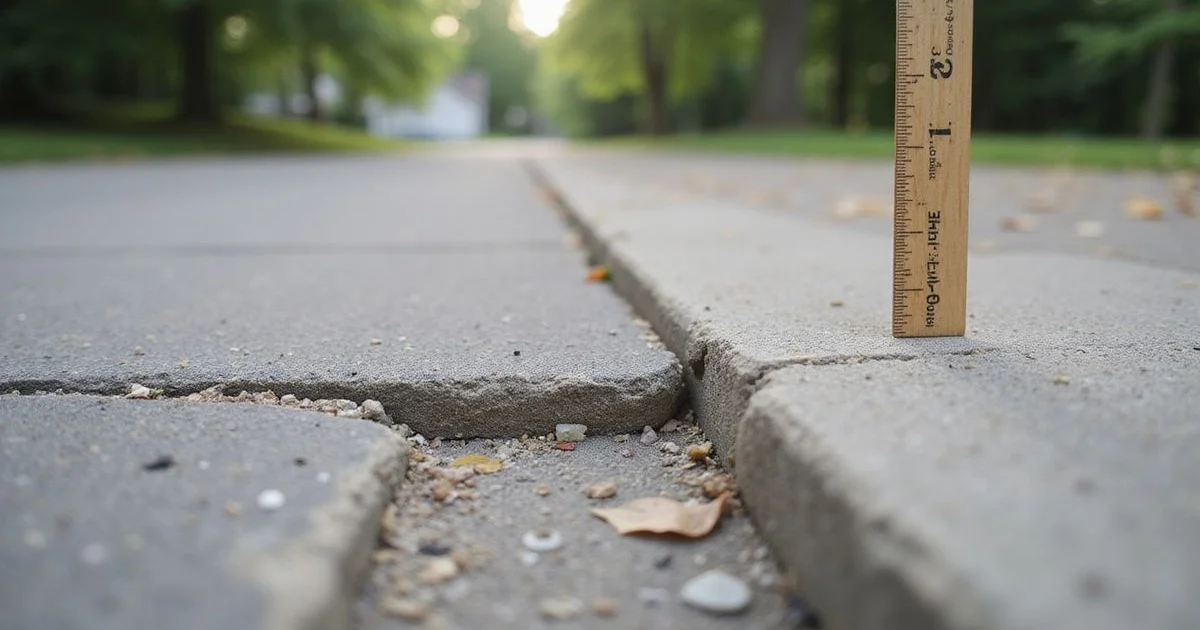
Our team walks properties across the region every day, diagnosing issues that homeowners often misunderstand.
A small gap near the garage might look like a minor cosmetic issue at first glance. That tiny crack is actually a critical symptom of soil settlement happening right beneath the surface.
We rely on a specific diagnostic checklist to separate urgent safety hazards from minor aesthetic flaws. The following breakdown will show you exactly what to look for around your yard. Let’s review the data, explain what these symptoms mean, and outline a practical response plan to address those early signs concrete needs leveling.
9 signs your concrete needs leveling
Our on-site assessments usually reveal one or more of these nine specific indicators. Catching these sunken concrete signs early prevents minor soil washouts from turning into expensive full-slab replacements.
This checklist covers the most common problems you will find around your property.
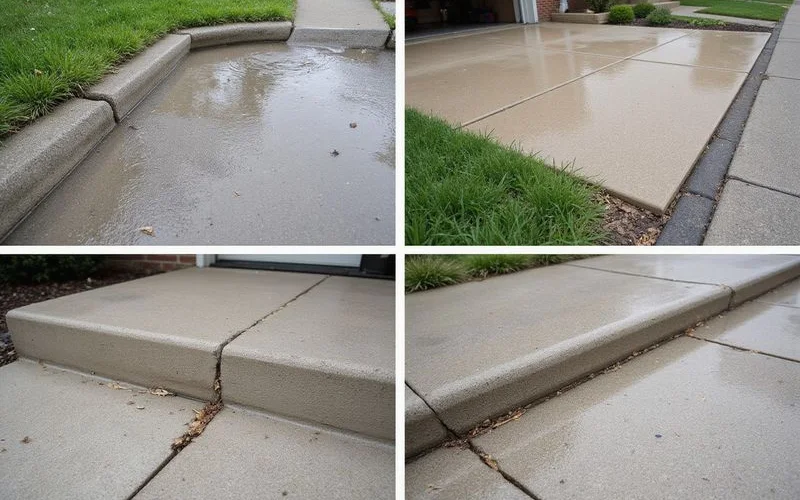
- Our team often sees pooling water near the foundation or door threshold because the slab sloped the wrong way from settling.
- A step-down at a slab joint creates a vertical offset where two slabs meet, proving that one piece has dropped.
- Cracks running parallel to the joint serve as an early settling indicator before the visible step actually appears.
- Our technicians know a driveway pulling away from the garage threshold means the heavy slab is actively shifting.
- A sidewalk trip hazard over 1/4 inch officially violates the Americans with Disabilities Act of 1990.
- A garage door not sealing at the threshold lets light shine under a closed door, meaning the concrete has dropped far below the weather seal.
- Our crews listen for a hollow sound under footsteps because it reveals a hidden sub-slab void forming below the surface.
- A pool deck edge slab dropping below the coping indicates severe soil washout under the deck.
- A patio sloping toward the house, not away, signals a serious drainage failure resulting from settlement.
Severity guide
Our crews highly recommend addressing any gap before someone gets hurt. Repair costs escalate quickly if you ignore these initial warnings.
A proactive approach saves a tremendous amount of money and hassle. We use 2026 pricing data to help customers understand the financial impact of waiting.
According to recent Angi market analysis, concrete leveling typically falls between $750 and $6,000 based on the repair method. Full replacements easily cost 50 to 70 percent more than a straightforward leveling project.
| Condition | Severity Level | Recommended Action |
|---|---|---|
| Hairline cracks | Low Priority | Monitor and seal |
| Step-downs and gaps | Medium Priority | Level immediately |
| 1/4-inch trip hazard | Safety Hazard | Remove liability today |
Our team categorizes property damage into three distinct levels.
Monitor (low priority)
Hairline cracks parallel to joints require observation, assuming there is no visible settlement. Scheduling an annual joint sealing appointment prevents dangerous water infiltration.
We consider step-downs, pooling water, garage seal failure, and pool-deck-edge gaps to be the next level of concern.
Call now (medium priority)
These structural problems compound extremely fast. Soil washes out further, voids grow, and the final lift cost increases with each passing season.
We classify severe uneven driveway warning signs as immediate emergencies.
Safety hazard (act this week)
Sidewalk trip hazards over 1/4 inch create massive ADA exposure. Garage floors deep enough to scrape a vehicle undercarriage, or pool deck slabs offering visible structural risk, demand action this week.
Metro Detroit-specific signs
Our service area presents unique environmental challenges that destroy concrete faster than in other climates. A few signs are especially common in Wayne, Macomb, and Oakland counties.
The regional soil composition and weather patterns create a perfect storm for slab failure. We constantly battle the effects of local clay-rich soils.
Detroit soil contains heavy clay that swells dramatically when wet and shrinks tightly once dry. This constant expanding and contracting puts immense strain on flatwork.
- Our region experiences frost-cracked joints from Michigan winters because of dozens of freeze-thaw cycles every single year. This extreme temperature fluctuation is especially tough on driveways without proper joint sealant. Water seeps into the unsealed gaps, freezes, expands, and shatters the concrete.
- Our teams frequently see edge slab settling on lakeside properties in coastal areas like St. Clair Shores and Harrison Township. A high water table drives sub-soil washout right under the seawall and pool deck slabs. The constant water movement strips away the supporting dirt layer.
- Our crews respond to tree-root upheaval in older neighborhoods across Detroit, Eastpointe, and Dearborn. Mature trees in narrow lots have decades of root growth pushing slabs upward. These expanding roots generate enough force to easily crack six inches of solid concrete.
When it’s the slab vs. when it’s the foundation
Our technicians always clarify a critical distinction before starting any project. Concrete leveling strictly addresses slab-on-grade issues, including driveways, sidewalks, patios, and garage floors.
It does not fix foundation settlement. We refer customers to specialists when we spot major structural red flags.
Recent 2026 HomeGuide data shows that Detroit foundation repairs average $1,870, with severe cases exceeding $14,000.
If you see wall cracks, doors sticking, or windows out of square, that indicates massive foundation movement requiring a dedicated foundation contractor. We will honestly redirect you on-site if we spot those specific structural symptoms.
You can learn more about this crucial distinction in the concrete leveling vs. foundation repair guide. Additional details are also available in the post covering why concrete sinks in Michigan.
What to do next
We want to help you address the signs concrete needs leveling before minor issues turn into major hazards.
If you notice two or more signs from the diagnostic checklist above, you should request a free estimate. Addressing these problems early is the smartest financial decision a homeowner can make.
We will walk the property, diagnose the underlying cause, and tell you exactly what is happening beneath the surface. The on-site evaluation determines whether leveling fits the situation.
You will know immediately whether replacement or another fix is the right call for your home.
Common Questions
Quick answers from our Metro Detroit crew.
How sunken is too sunken?
Should I wait until spring?
Will the problem get worse?
More from this topic
How Much Does Concrete Leveling Cost in Michigan?
Real Michigan concrete leveling prices by slab type and depth. See what drives cost, how it compares to replacement, and our no-fix-no-charge guarantee.
Concrete Leveling vs. Replacement: Which Is Right?
Compare concrete leveling vs. full replacement: cost, downtime, and when each makes sense in Metro Detroit. Honest guidance, no upsell.
Concrete Leveling vs. Foundation Repair: When You Need Each
Slab leveling addresses sunken concrete; foundation repair addresses structural settlement. A clear decision tree, with honest referrals when needed.
Have a slab to lift? Let's take a look.
Free, no-obligation on-site estimate. If we can't fix it, you don't pay.