Cracked vs. Sunken Driveway
Hairline crack? Through crack? Settling? Diagnose your Metro Detroit driveway and pick the right repair: leveling, joint sealing, or replacement.
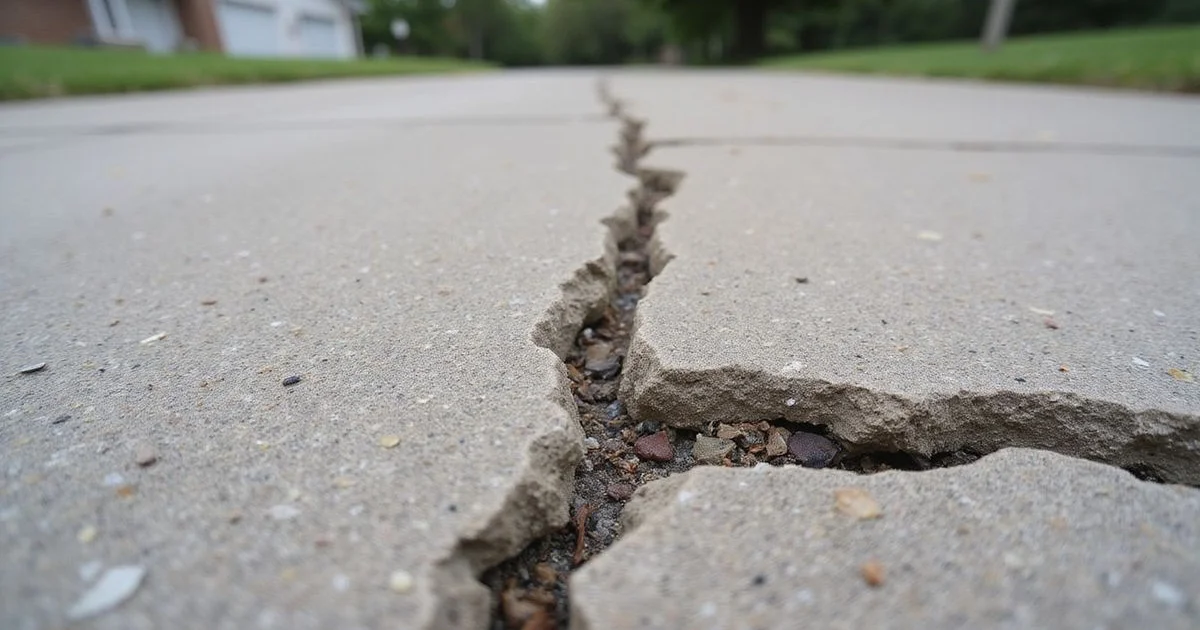
You know how a single, tiny crack can completely ruin the look of an otherwise perfect patio. It is a frustrating reality for property owners. If your driveway is sinking rather than cracking, see our driveway leveling service for the right repair path.
The problem is rarely just cosmetic.
We hear this complaint constantly from our commercial and residential clients across Michigan. Water sneaks into those gaps, the soil shifts, and suddenly you have a major tripping hazard.
Let’s look at the actual diagnostic process for a cracked vs sunken driveway repair. I am going to help you diagnose driveway problem symptoms right now. Then, we can explore the exact repair methods that provide a permanent fix.
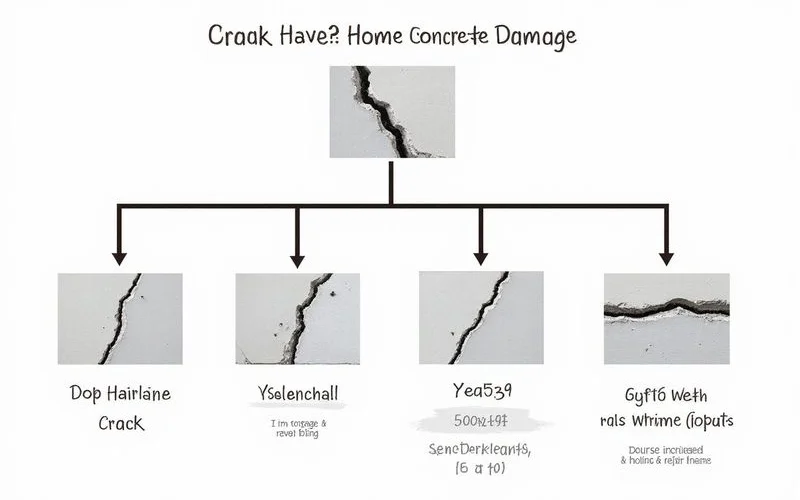
Hairline cracks (under 1/16 inch)
These tiny fissures are cosmetic and require joint sealing or crack filling to prevent future water damage. They look harmless initially, but they are essentially open doors for moisture. Water expands by exactly 9 percent when it freezes.
Our local Michigan freeze-thaw cycles turn small surface issues into massive structural problems over just a few winters. This constant expansion and contraction acts like a wedge inside the slab.
We always tell homeowners to skip the standard hardware store caulking. Cheap polyurethane sealants often dry out and split under direct sunlight. Instead, use a contractor-grade, silicone-based sealant because these commercial options resist UV rays and stay flexible year-round.
The Fix: Joint sealing or crack filling stops the cycle and restores cosmetic integrity.
Surface cracks (1/16 to 1/4 inch)
This size of damage indicates aging concrete, and the required fix is crack filling combined with joint sealing. A standard residential driveway is typically poured four inches thick. A quarter-inch crack means the majority of the slab is still structurally sound beneath the surface.
You still have time to save the concrete if you act quickly. Our repair process focuses on stabilization before the damage deepens. Ignoring these gaps allows water to erode the soil base underneath.
You will eventually end up with a fully broken slab if the erosion continues.
The Fix: Crack filling and joint sealing. If the slab is also settling, level and seal the concrete in one single visit.
Through-cracks (full slab thickness)
A through-crack means the slab is structurally broken, and tearing it out for a full replacement is usually the only fix. You can typically identify this by a visible height offset between the two sides. The slab is now officially broken into two independent pieces.
We cannot effectively “glue” two separate structural pieces back together using foam or mudjacking. The concrete has lost its load-bearing capacity entirely. While polyurethane lifting is a fantastic tool, it relies on the structural integrity of the slab itself to hold the lift.
The Fix: Usually replacement. Lifting will not help a slab that is already in multiple pieces.
Settling without cracking
When a slab sinks without cracking, you need professional concrete leveling to lift the slab and stabilize the soil. Sometimes the concrete is perfectly intact, but the ground underneath has failed. Wayne and Macomb County soils contain heavy concentrations of expansive Montmorillonite clay.
This specific clay shrinks dramatically during dry summer months and swells when wet. Our technicians see this constant shrinking and swelling create deep voids beneath the driveway. The heavy concrete simply sinks into the empty space.
Modern Lifting vs. Traditional Mudjacking
Understanding a driveway crack vs settle issue requires looking at the soil, but you do not need to replace the concrete when the sub-soil shifts. Leveling the slab is a highly effective solution. Modern polyurethane foam injection has largely replaced traditional mudjacking for this exact issue.
We strongly prefer polyurethane foam because it cures rapidly and will not wash away like old-school cement slurries. Recent 2025 industry data shows foam lifting averages $5 to $25 per square foot. This method is incredibly cost-effective compared to the massive expense of a full replacement.
| Feature | Polyurethane Foam | Traditional Mudjacking |
|---|---|---|
| Average Cost (2025) | $5 to $25 per sq. ft. | $3 to $8 per sq. ft. |
| Cure Time | 30 minutes | 24 to 72 hours |
| Material Weight | Very lightweight | Extremely heavy |
| Moisture Resistance | High (Waterproof) | Low (Can wash away) |
The Fix: Leveling. We lift the slab, fill the void, and permanently stabilize the sub-soil.
Settling with cracking
For this combination issue, you must treat the settlement first with foam leveling before sealing the cracks. A sunken driveway almost always develops cracks as the unsupported concrete bends under its own weight. The order of operations is critical for a successful repair.
Our standard procedure is to inject high-density foam to lift the slab back to its original grade. The lifting process naturally pushes the separated crack edges closer together.
After the slab is fully supported, you must seal the cracks and joints to prevent future water infiltration. If you seal the cracks before lifting, the sealant will just tear apart as the concrete rises.
Important Note: If the cracks are full through-cracks, replacement might be necessary instead of leveling.
Red flags requiring structural inspection
Severe warning signs like diagonal cracks or growing gaps require immediate evaluation by a structural engineer. Not all concrete damage is created equal. Some patterns point directly to severe foundation failure rather than simple surface aging. You should call an expert immediately if you spot these specific warning signs.
- Diagonal cracks: Fissures running at a 30 to 75-degree angle across the slab indicate differential settlement.
- The X-pattern: Paired diagonal cracks framing a doorway or window strongly suggest a centralized foundation failure.
- Growing gaps: Cracks that actively get wider or longer month over month.
- Secondary damage: Cracks accompanied by sticking doors, jammed windows, or distinct wall fractures inside the home.
- Independent movement: Slab pieces that audibly grind or rock back and forth when stepped on.
For more detailed information, see our signs your concrete needs leveling guide and our comparison on concrete leveling vs. foundation repair.
When to combine leveling and sealing
A proper cracked vs sunken driveway repair often requires combining leveling and sealing to restore the grade and block water. Most aging Metro Detroit driveways need this dual approach for long-term stability. Lifting restores the proper height and eliminates tripping hazards.
Sealing acts as a protective shield to stop the next round of water from washing out the soil. Our team bundles both services into a single visit whenever it makes sense. Contractors often charge minimum trip fees ranging from $300 to $500 just to show up.
Tackling a cracked vs sunken driveway repair early saves you significant money and eliminates the hassle of scheduling multiple appointments. If you are tired of looking at uneven concrete, reach out to a professional to assess your property.
Common Questions
Quick answers from our Metro Detroit crew.
Are hairline cracks a problem?
What does a 'through-crack' look like?
More from this topic
The Driveway Leveling Process Step-by-Step
Walk through a real Detroit driveway leveling job: assess, drill, inject, patch, drive on it tonight. 4 steps, 2-6 hours, no demolition.
Driveway Leveling vs. Driveway Replacement
Cost gap, downtime, and when replacement is the right call. Plus how to handle a driveway with both surface cracks AND settling.
How Long Does a Leveled Driveway Last?
10+ years is typical. See what affects lifespan: sub-soil, drainage, traffic, sealing. Plus what our written warranty covers.
Have a slab to lift? Let's take a look.
Free, no-obligation on-site estimate. If we can't fix it, you don't pay.