Driveway Leveling: Step-by-Step
Walk through a real Detroit driveway leveling job: assess, drill, inject, patch, drive on it tonight. 4 steps, 2-6 hours, no demolition.
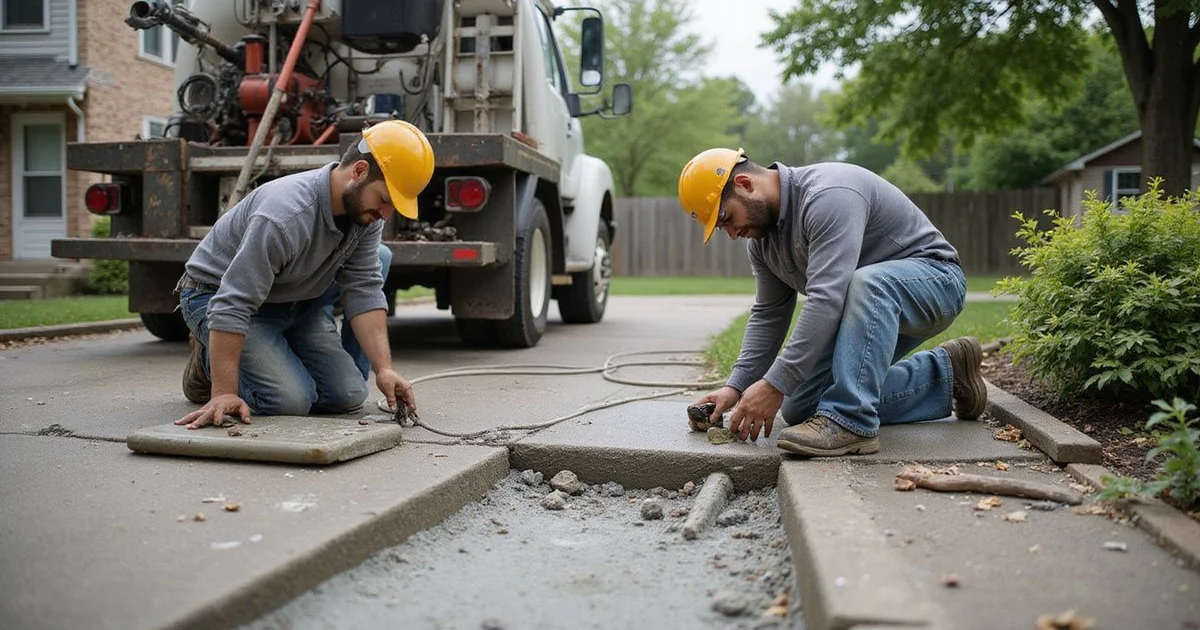
Most Metro Detroit driveway leveling jobs follow the same 4-step process. Here’s what happens, hour by hour.
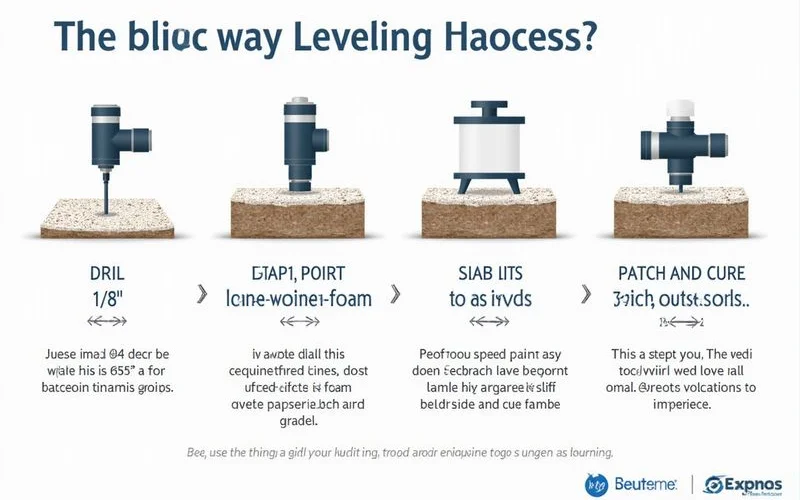
You know how quickly a small crack turns into a massive, tire-damaging drop-off. We see this issue constantly across the US, and understanding the complete driveway leveling process is your best defense against expensive concrete failure.
The key takeaway is that tearing out the whole slab is rarely the best answer. At Concrete Leveling Detroit, our team focuses entirely on delivering superior concrete restoration without the heavy demolition.
Full replacement can cost upwards of $10,000 and leave your home a construction zone for a week.
Our hybrid leveling technique offers a smarter alternative. This method saves homeowners between 50 and 80 percent compared to the cost of pouring new concrete.
Let’s look at the data, how driveway leveling works in practice, and how you can get your surface back in just a few hours.
Step 1: Free on-site assessment (15-30 minutes)
The assessment begins with a precise measurement of the sunken area and an inspection of the underlying soil. We use specialized testing tools like a dynamic cone penetrometer to locate hidden voids beneath your driveway. Identifying the root cause is critical because fixing a surface crack does nothing if the dirt base remains compromised.
A common culprit in the US is improper drainage from downspouts, which washes away the dirt and creates empty pockets. Our estimator will pinpoint these issues and write a firm quote right on your property. This written document guarantees the price before any work begins.
We operate on a strict no-fix-no-charge policy. A slab might need replacement if it has shattered into pieces smaller than three square feet. You owe us absolutely nothing if we determine that concrete lifting cannot safely restore your driveway.
During this 30-minute visit, you can expect the following evaluations:
- Measurement of the total drop-off height.
- Detection of subsurface water pooling.
- Identification of active soil erosion paths.
- A transparent comparison of leveling costs versus a $5,000 to $10,000 replacement.
Step 2: Drill 3/8-inch ports (30-45 minutes)
The drilling phase creates small access points for the lifting material to reach the void. We drill precise 3/8-inch ports through the slab, which are roughly the diameter of a standard pencil. These tiny injection sites are vastly superior to the massive 1.5-inch to 2-inch holes required for traditional mudjacking.
Dust control is a major priority during this step to protect your property and comply with safety regulations. Our technicians follow strict OSHA 1926.1153 guidelines for silica dust management. Every drill is equipped with a HEPA-filtered vacuum system that captures 99 percent of the airborne dust immediately.
Proper hole placement dictates the success of the entire project. A strategic grid pattern allows the lifting material to spread evenly beneath the concrete.
Key factors that determine where these ports go include:
- The exact location of the deepest subsurface void.
- The natural joints and existing relief cuts in the concrete.
- The overall square footage of the settled section.
- The angle required to push water away from your home foundation.
Step 3: Inject limestone-foam mix (1-3 hours)
This step actively raises the sunken concrete back to its original position. We pump a specialized 100 percent limestone-and-foam hybrid through the injection ports using carefully controlled pressure. The liquid material flows into the empty pockets before aggressively expanding to lift the heavy slab.
Material Comparison
While older techniques still exist, modern lifting materials provide significantly better results. We strongly recommend hybrid solutions over outdated mudjacking slurries.
| Feature | Traditional Mudjacking | Limestone-Foam Hybrid |
|---|---|---|
| Material Weight | 100+ lbs per cubic foot | 2 to 4 lbs per cubic foot |
| Curing Time | 24 hours | 15 minutes |
| Expansion Capability | None (Hydraulic pressure) | Expands up to 20x volume |
| Hole Size Required | 1.5 to 2 inches | 3/8 inch |
This lightweight mixture exerts almost zero burden on the underlying dirt. The foam component expands quickly within seconds to compress loose soils and raise the concrete.
Precision Monitoring Techniques
A successful lift requires exact measurements rather than guesswork. We utilize precise leveling tools like a ZipLevel altimeter to track the slab’s movement millimeter by millimeter. This constant monitoring guarantees that your driveway perfectly aligns with the garage floor or adjacent sidewalk.
Step 4: Patch and final QC (30-45 minutes)
The final step seals the work area and verifies the structural stability of the lifted slab. We patch every 3/8-inch port using a specialized, non-shrink Portland cement grout. This color-matched material blends in cleanly with your existing concrete to leave a polished finish.
Fast curing times are a major advantage of using a polyurethane foam hybrid. The lifting material cures to 90 percent rigidity in approximately 15 minutes. Traditional mudjacking often requires you to wait 24 hours before walking or driving on the surface.
Our quality control process ensures the repair will last for years. The crew walks the joints to confirm there is zero movement or rocking under pressure.
A complete quality check includes:
- Verifying water properly flows away from the garage.
- Documenting the final grade for your permanent warranty records.
- Cleaning the area with HEPA vacuums to remove stray dust.
- Confirming the concrete is fully ready for vehicle traffic.
You can safely park a 5,000-pound SUV on the driveway that exact same evening.
What you do during the job
Your primary responsibility is simply providing the crew with clear access to the sunken slab. We ask that you move all vehicles to the street or inside the garage before the scheduled start time.
Clearing away potted plants or temporary landscaping that blocks the edges of the concrete is also necessary.
The overall disruption to your day is extremely minimal. Standard rotary hammer drills produce around 90 to 100 decibels of sound, which is comparable to a loud lawnmower.
The noise is isolated and temporary. This fast process will never interfere with your underground utilities or home power supply.
For driveway-specific service details, see our driveway leveling service page and general concrete leveling process.
Take the next step in the driveway leveling process and request a free estimate to start fixing your concrete today.
Common Questions
Quick answers from our Metro Detroit crew.
How long is my driveway out of use?
Will the patches match my driveway?
More from this topic
Cracked vs. Sunken Driveway: Choosing the Right Fix
Hairline crack? Through crack? Settling? Diagnose your Metro Detroit driveway and pick the right repair: leveling, joint sealing, or replacement.
Driveway Leveling vs. Driveway Replacement
Cost gap, downtime, and when replacement is the right call. Plus how to handle a driveway with both surface cracks AND settling.
How Long Does a Leveled Driveway Last?
10+ years is typical. See what affects lifespan: sub-soil, drainage, traffic, sealing. Plus what our written warranty covers.
Have a slab to lift? Let's take a look.
Free, no-obligation on-site estimate. If we can't fix it, you don't pay.